IdeasGuide from the studio
Media wall ideas for Pakistani lounges
The short answer
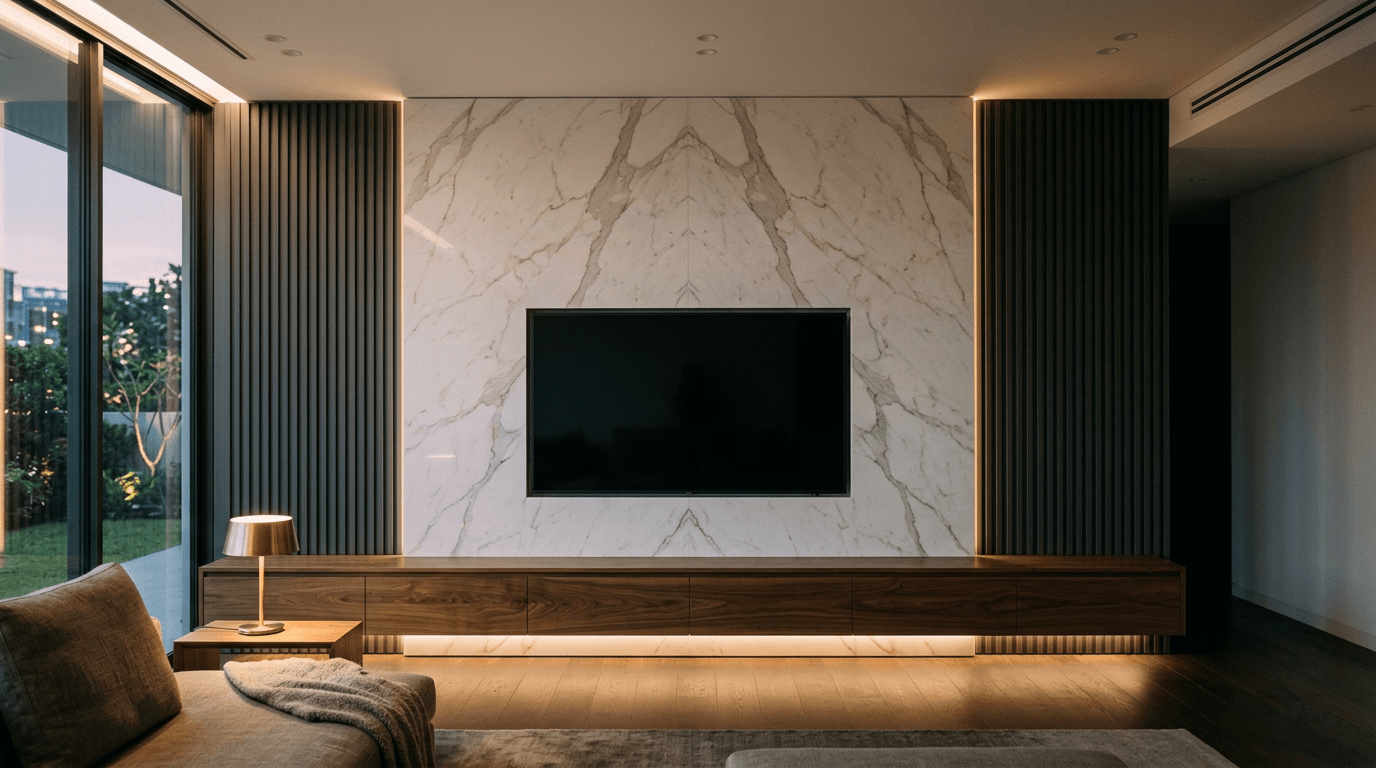
Start a media wall with the TV: put the centre of the screen at seated eye level, centred on the sofa, then build the wall around it. The layout that suits most Pakistani lounges is a UV marble centre behind the TV, fluted WPC panels either side, a warm LED reveal and the cables hidden in a channel. Plan sockets, wiring and the bracket before any panel goes up, because they are hard to move afterwards.
On this page8 sections · 6 min read
In most Pakistani lounges the TV wall is the one everyone faces, so it is the wall most worth getting right. A media wall turns it from a screen on a painted wall into a piece of the room. The ideas below are the ones we plan on almost every lounge media wall, in the order you should decide them: the screen first, then the marble, the sides, the light and the wiring.
Where should the TV go on a media wall?
Start with the screen, not the panels, because everything else is laid out around it. The most common mistake we see is a TV mounted too high, usually because it was lined up with a cabinet rather than with the people watching it.
- Sit where you normally watch, on your own sofa, and look straight ahead at the wall.
- Have someone mark the wall at your eye line. That mark is the centre of the screen.
- Centre the TV on the seating, not on the wall. If the sofa sits off-centre, the TV follows the sofa, and the marble centre follows the TV. The fluted sides then absorb the difference.
Tell us the TV model when you ask for a quote. Its width and its bracket decide the size of the marble centre and where the fixings go.
How wide should the marble centre be?
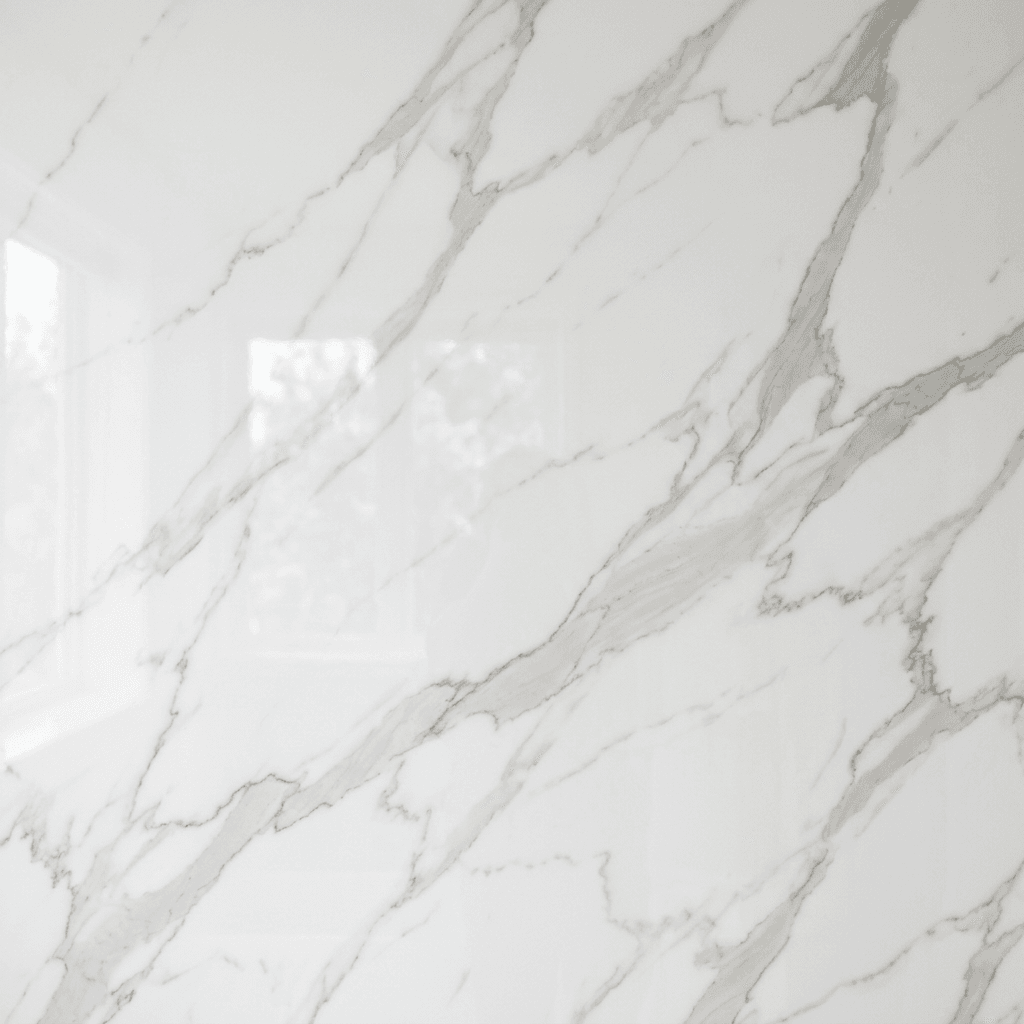
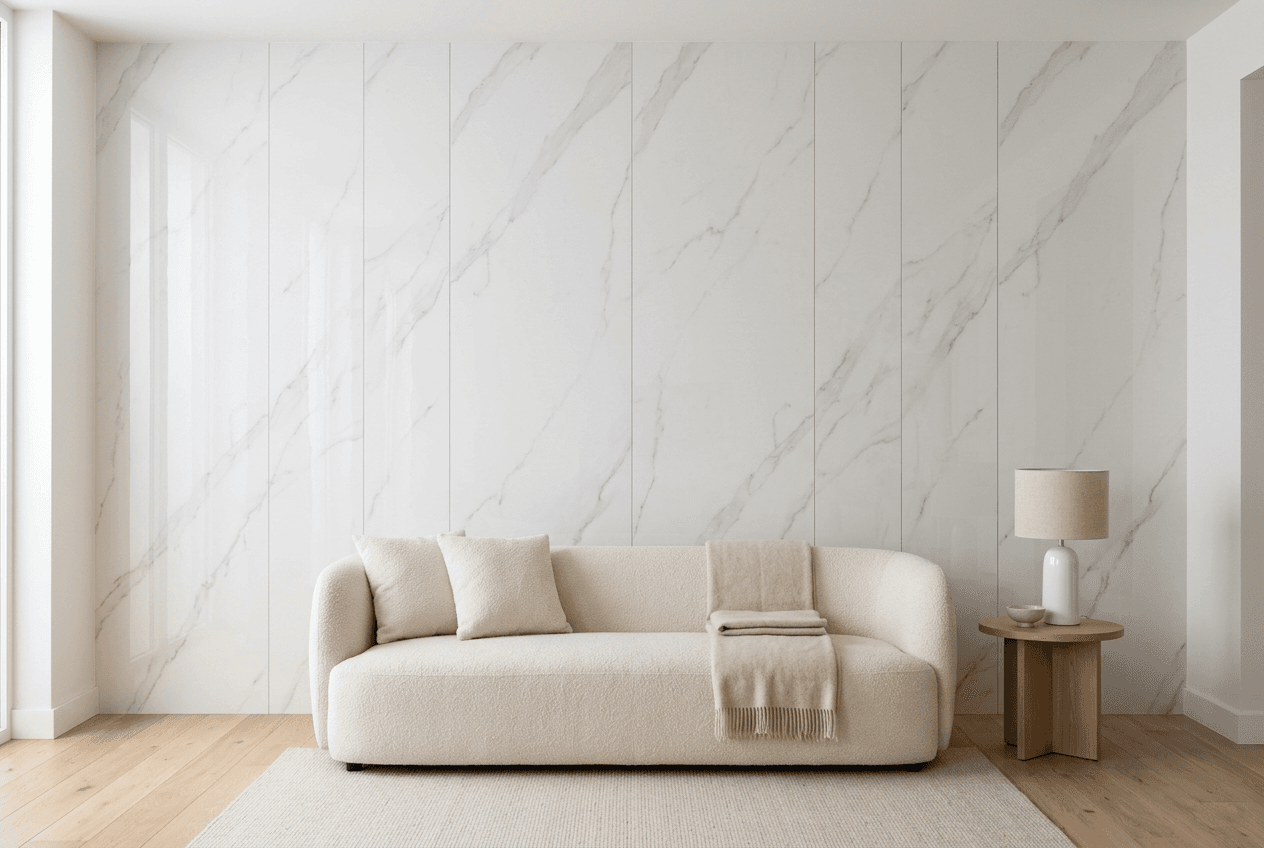
A UV marble sheet is 1220 mm wide, which is 4 ft to within a millimetre, so marble centres come in tidy steps: 4 ft from one sheet, 8 ft from two. Measure the TV’s actual width, not its diagonal, and choose the centre that leaves clear marble on both sides of the screen, so the TV sits on the stone rather than filling it edge to edge.
An 8 ft centre has a hidden advantage. Two sheets meet in the middle, which puts the only joint right behind the TV, where nobody will ever see it. Our UV marble sheet guide covers joints and sizes in more detail.
What goes either side of the marble?
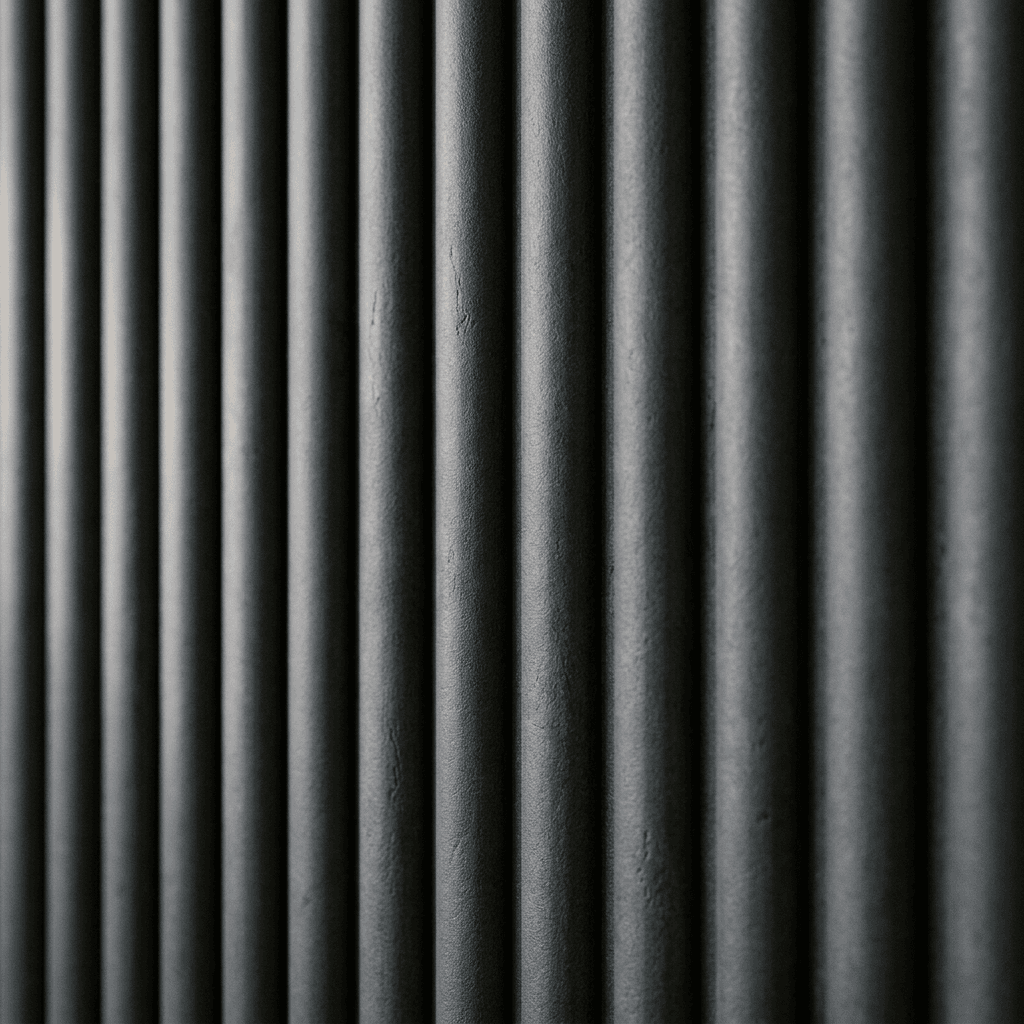
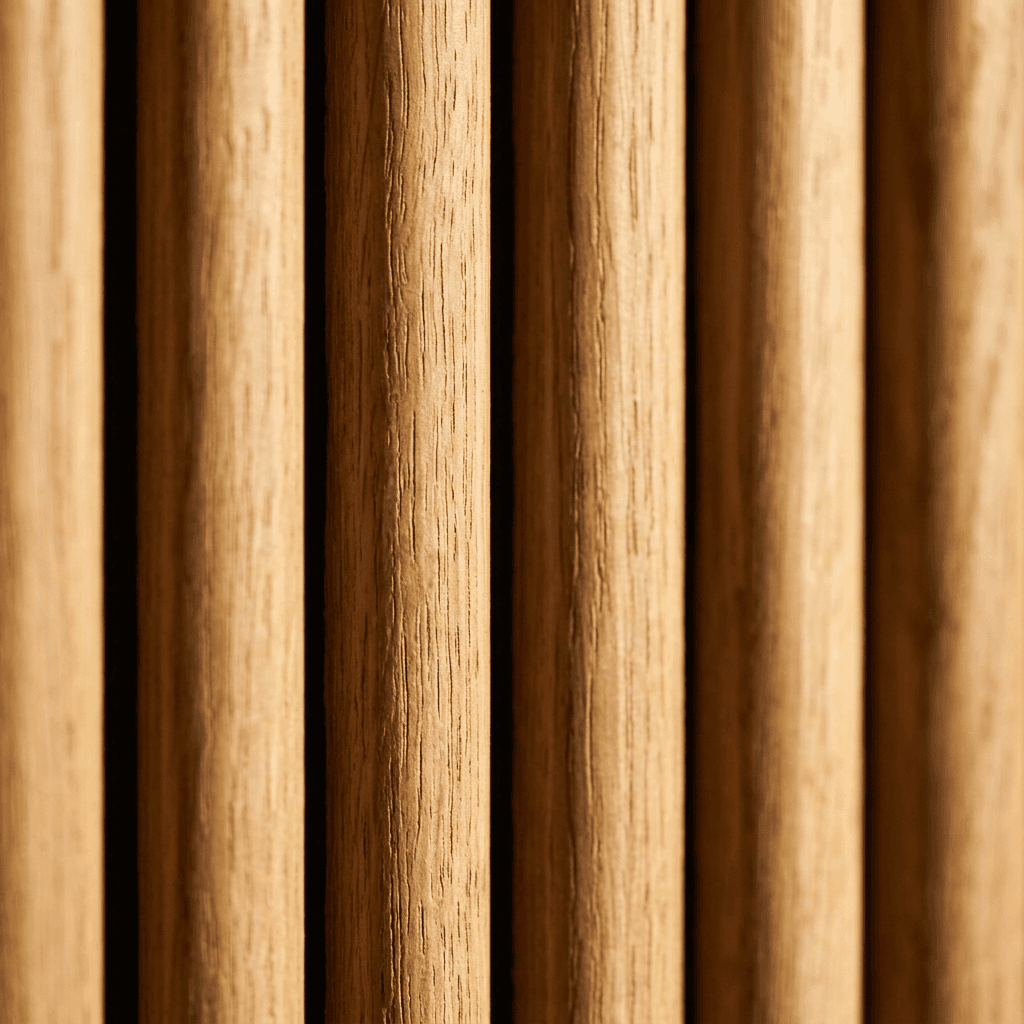
Fluted WPC either side gives the gloss something to play against. Charcoal flutes make the marble glow and hide the dark rectangle of a switched-off TV. Teak flutes make the same wall warmer and softer. Both are in the 160 series, so a 4 ft side takes 8 panels: 1,219 mm ÷ 160 mm = 7.6, rounded up.
| Wall width | Marble centre | Each side | Flutes each side |
|---|---|---|---|
| 12 ft (3,658 mm) | 4 ft, 1 sheet (1,220 mm) | 1,219 mm | 8 panels |
| 14 ft (4,267 mm) | 8 ft, 2 sheets (2,440 mm) | 914 mm | 6 panels |
| 16 ft (4,877 mm) | 8 ft, 2 sheets (2,440 mm) | 1,219 mm | 8 panels |
Keep the sides equal. If the TV has to sit off-centre, it is usually better to shift the whole marble centre with it than to end up with one wide side and one narrow one.
How do you light a media wall with an LED reveal?
A warm LED reveal is a strip of light set into a slim recess, so you see the glow and never the strip. It is what makes a media wall look finished at night. The usual places are:
- along the top edge of the marble centre, washing light down the gloss;
- down the line where the marble meets the flutes, which picks out every flute edge;
- under a floating console, so the unit seems to hover.
Choose warm white rather than cool white. Warm light flatters teak, charcoal and white gold marble, and it is easier to live with during an evening of TV. Ask for the LED driver, the small box that powers the strip, to sit somewhere you can reach without taking a panel off, because drivers and strips are the parts that eventually need replacing.
How do you hide TV wires in a media wall?
Hidden wiring has to be planned before a single panel goes up. Once the wall is finished, every forgotten cable means a cut. Decide these before you ask for a quote, and show them in your photo:
- Power behind the TV: sockets at bracket height, hidden by the screen.
- A cable channel from behind the TV down to the console, for HDMI, the internet or cable box and a sound bar.
- The router and boxes: where they live, and whether they need a socket inside the console.
- UPS or inverter sockets: if the TV and router stay on during load-shedding, wire that socket in now.
- The split AC: if the indoor unit is on the same wall, its pipe and drain need their own planned route and cut-outs.
Your electrician runs the wiring. We plan the panel layout around it, so cut-outs land neatly on a flute line instead of in the middle of a panel.
Should the TV hang on the wall or sit on a console?
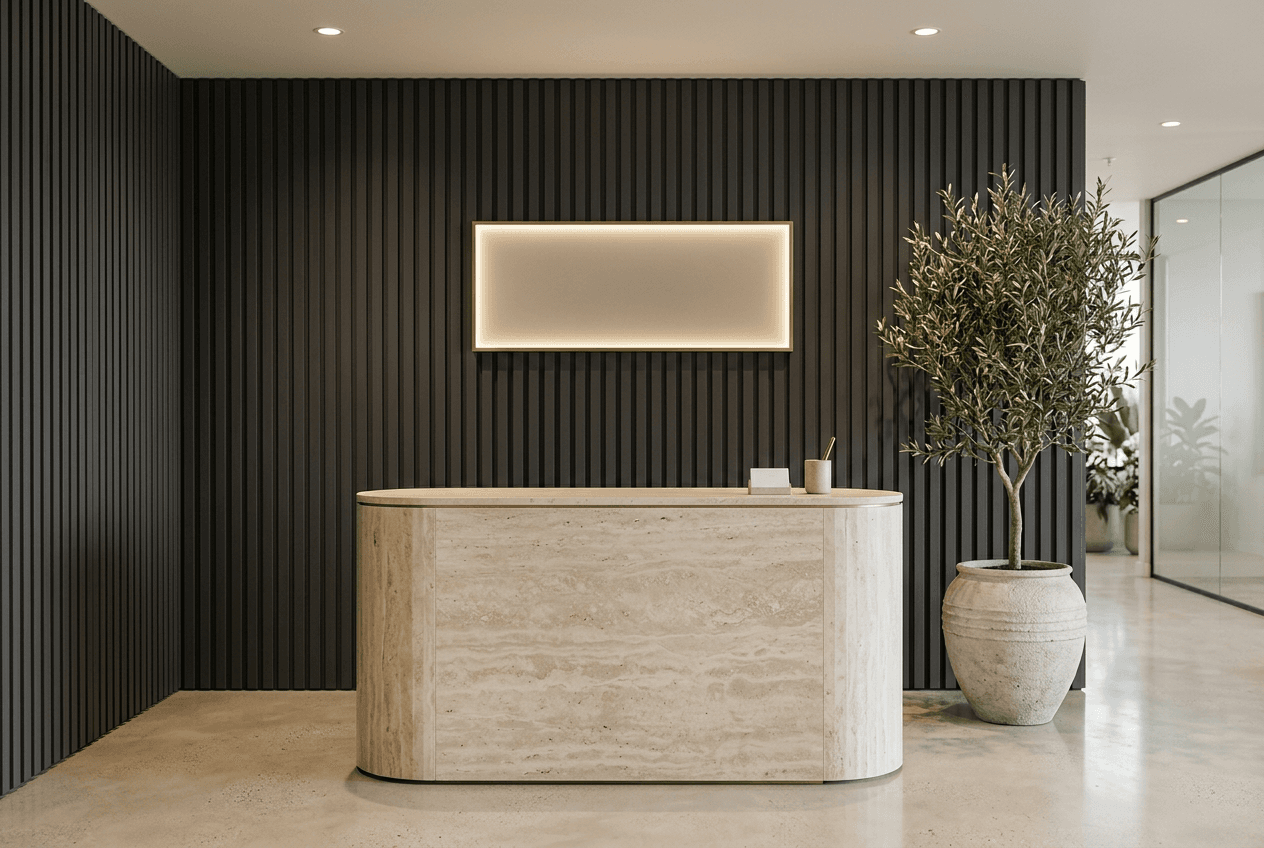
Wall-hung TVs suit media walls best, because the screen sits on the marble and the wall reads as one composition. A low console or a floating shelf under it holds the boxes and the sound bar. The room in our media wall design guide uses a walnut console against charcoal flutes. Whatever the furniture, line its top up with something on the wall, a trim or the LED reveal, so the two look designed together.
What are the most common media wall mistakes?
- The TV too high. Use the eye-line method above.
- A visible marble joint. Plan sheet widths so joints hide behind the screen or fall on a trim.
- Slivers of panel at the ends. Choose side widths that use whole panels, or split the cut evenly between both ends.
- Forgetting a socket. List every device when you ask for a quote, including the ones you plan to buy.
- Covering a damp wall. Outside lounge walls often show seepage in the monsoon. We check every wall for moisture first; see wall panels on damp walls.
People also ask
What is the right height for a TV on a media wall?
Put the centre of the screen at the eye level of someone sitting on your sofa. Sit where you watch, look straight ahead and mark the wall at your eye line: that mark is the centre of the screen. Most TVs that feel wrong are mounted too high.
What is the best material for a TV wall?
For most lounges, a UV marble sheet centre behind the TV with fluted WPC panels either side. The marble gives gloss and brightness, and the flutes add texture and hide the dark rectangle of a switched-off screen. An all-WPC wall in teak or charcoal is the warmer, quieter option.
Can TV wires be hidden inside a panelled wall?
Yes, if it is planned before the panels go up. Sockets go behind the TV and a cable channel runs down to the console for HDMI, the internet box and a sound bar. Your electrician runs the wiring and we plan the panel cut-outs around it.
How long does a media wall take to install?
Our own crew usually installs a single wall in one day. A media wall with an LED reveal, a cable channel and a marble centre can take longer, so ask us when you get your quote.
Can a media wall go on an outside wall?
Yes, if the wall is dry. Outside walls are the ones most likely to show seepage in the monsoon, so mention any damp when you send your photo. The wall is checked with a moisture meter before fitting, and we will not panel over active damp.
About this guide
Written by the interiors.pk studio team, based on the products we supply and install. Sizes and specs are from our current range. Last updated .