Buying guideGuide from the studio
Wall panel terms, explained
The short answer
A plain-English glossary of the words you will hear when planning a panelled wall in Pakistan. It covers the materials (WPC, PVC, UV sheets, PU stone, PS and onyx), the profiles (fluted, reeded, slatted and series), the parts (trims, end caps, skirting, French moulding), the projects (feature, accent and media walls, wainscoting, cladding) and the site terms (seepage, primer, adhesive, scribing). Each definition stands on its own.

On this page6 sections · 7 min read
This glossary explains the words used in Pakistani wall shops, on quotes and on site, in one to three sentences each. The terms fall into five groups: what panels are made of, the shape of their face, the parts that finish them, the kinds of wall project, and the words fitters use about the wall. interiors.pk supplies and installs fluted WPC panels, UV marble sheets, 3D PVC panels and fabric wallpaper in Islamabad, and the definitions use our range as the example.
Materials: what panels and sheets are made of
Most wall panels sold in Pakistan are plastic or a plastic composite, not solid wood. The material decides how a panel handles damp, termites and knocks, and the names are often abbreviations. These are the ones you will see on labels and quotes, from WPC and PVC to PU stone, PS and onyx.
WPC
WPC stands for wood-plastic composite: wood fibre bound into plastic and formed into rigid, profiled boards. It is waterproof and termite-resistant, which is why people choose it over MDF or plywood panelling that can swell in the monsoon or attract deemak. Our WPC wall panels come in the 160, 170 and 195 series, all 2.9 m long.
PVC
PVC, short for polyvinyl chloride, is the plastic behind most wall sheets and many decorative panels. It is light and waterproof, but it is still a plastic, so keep it clear of direct flame. In our range it means UV marble sheets and 3D panels, listed under PVC wall panels.
UV sheet
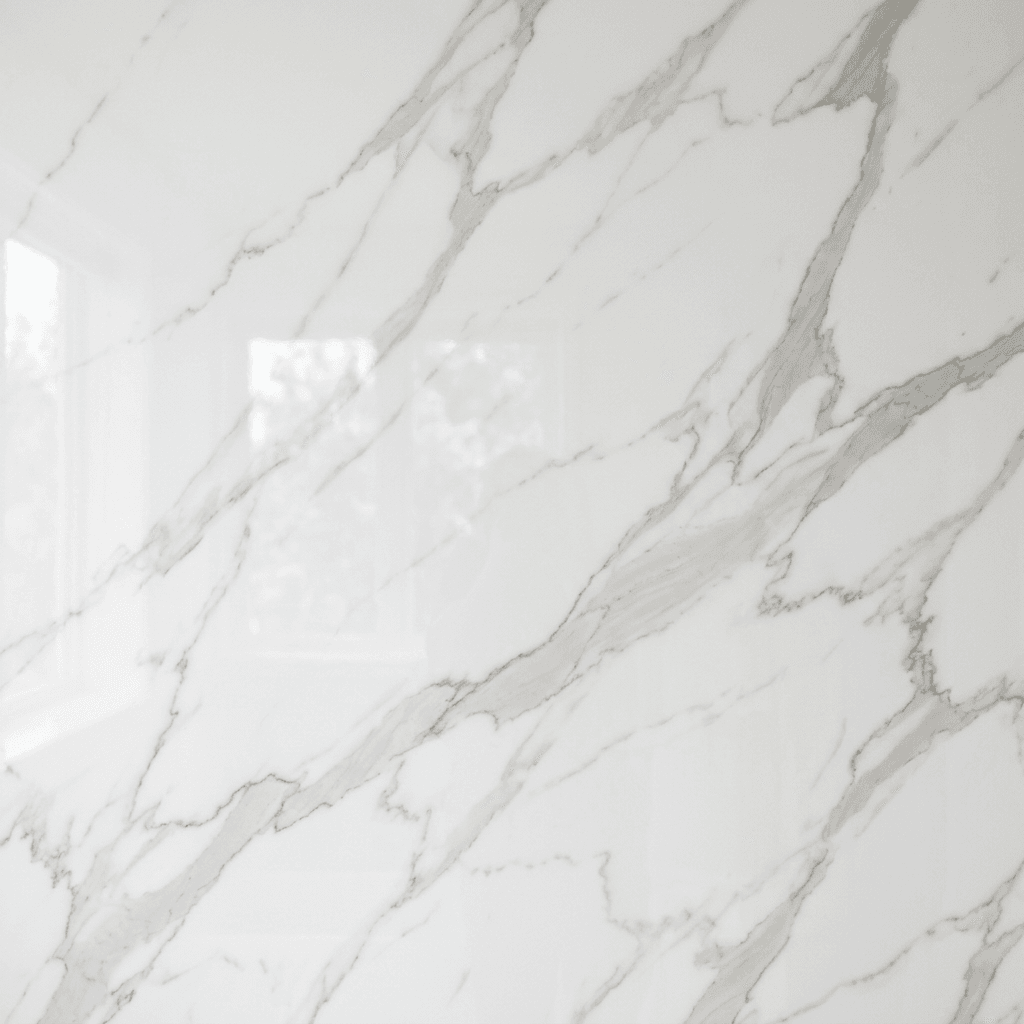
A PVC sheet printed with a pattern, usually marble, and sealed with a clear high-gloss coat cured under ultraviolet light. It is also sold as a UV marble sheet, PVC marble sheet or marble sheet. Our White gold UV marble sheet is 1220 × 2900 mm (4 × 9.6 ft) and 3 mm thick.
3D wall panel
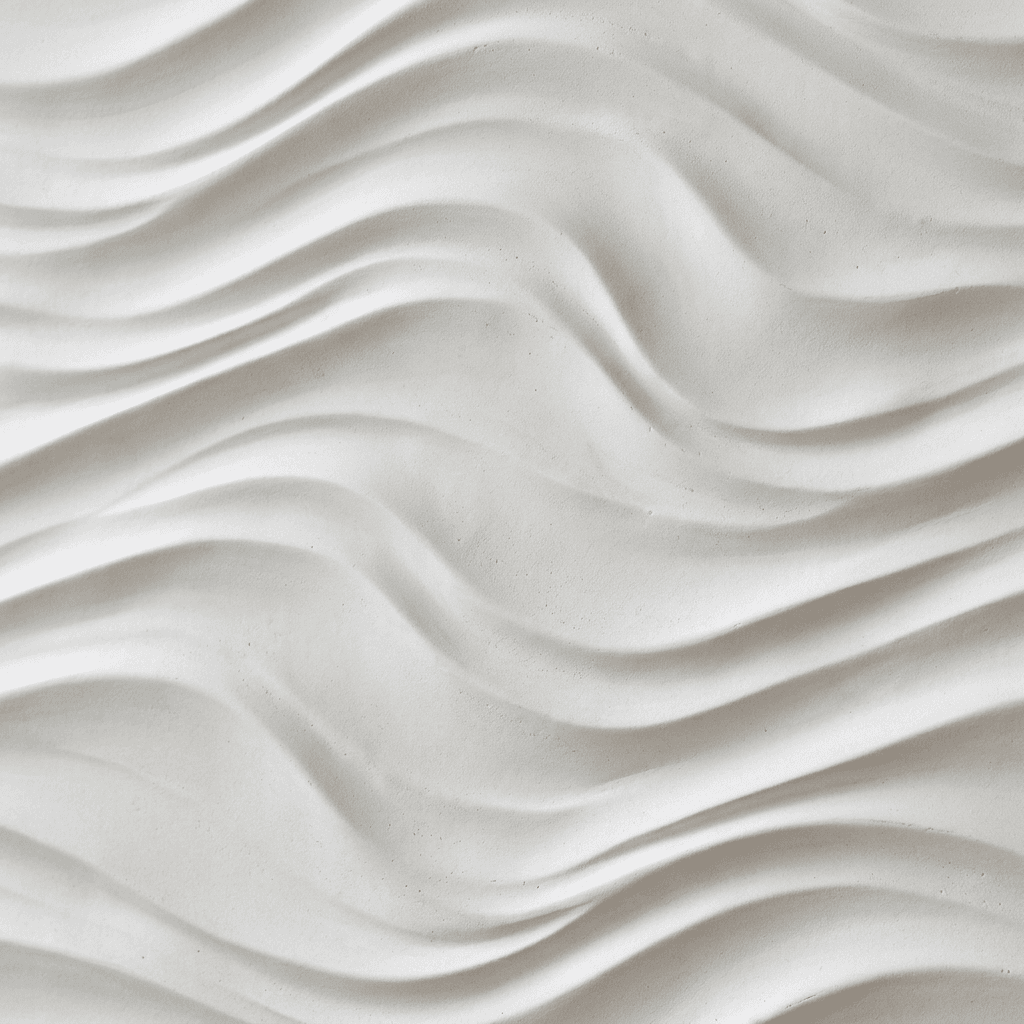
A rigid tile with a sculpted relief formed into its face, so it throws real shadows that change with the light. It is not the same as 3D wallpaper, which is a flat print or soft foam. Our White wave 3D PVC panel is a 50 × 50 cm tile for dry indoor walls.
PU stone panel
A lightweight panel moulded from polyurethane (PU) to look like stone, in textures such as rock, linear, diamond and cube. It gives a stone-look feature wall without the weight of real stone. We source PU stone panels on request.
PS panel
A panel or moulding made from polystyrene (PS), a light, rigid plastic, often with a printed wood, marble or solid-colour face. PS is common for slim decorative panels, louvers and mouldings. Ask how a PS product copes with knocks and damp before using it on a busy or humid wall.
Charcoal louvers
Slatted louver panels sold under the charcoal name, usually made from PS or a bamboo charcoal composite rather than solid wood; bamboo charcoal sheets are the flat version, about 4 × 9.6 ft. ‘Charcoal’ often names the material rather than the colour, so ask what a product is made of. We source both on request.
Onyx sheet
A translucent sheet made to look like onyx stone, designed to glow when lit from behind with LEDs. Sellers in Pakistan list backlit onyx sheets at about 4 × 8 ft and 5 to 6 mm thick. We source them on request.
Profiles: the shape of a panel’s face
A profile is the shape you see and feel on the face of a panel. It decides how the wall catches light: soft rounded shadows, sharp square gaps or a flat surface. Shops also describe panels by series, which is a width rather than a style. These four words cover most of what you will hear.
Series
The trade name for a panel’s width in millimetres: a 160 series panel is 160 mm wide. Our range has the 160 series (Teak and Charcoal, 24 mm thick), the 170 series (Sage) and the 195 series (Walnut slats, 14 mm thick), all 2.9 m long.
Fluted
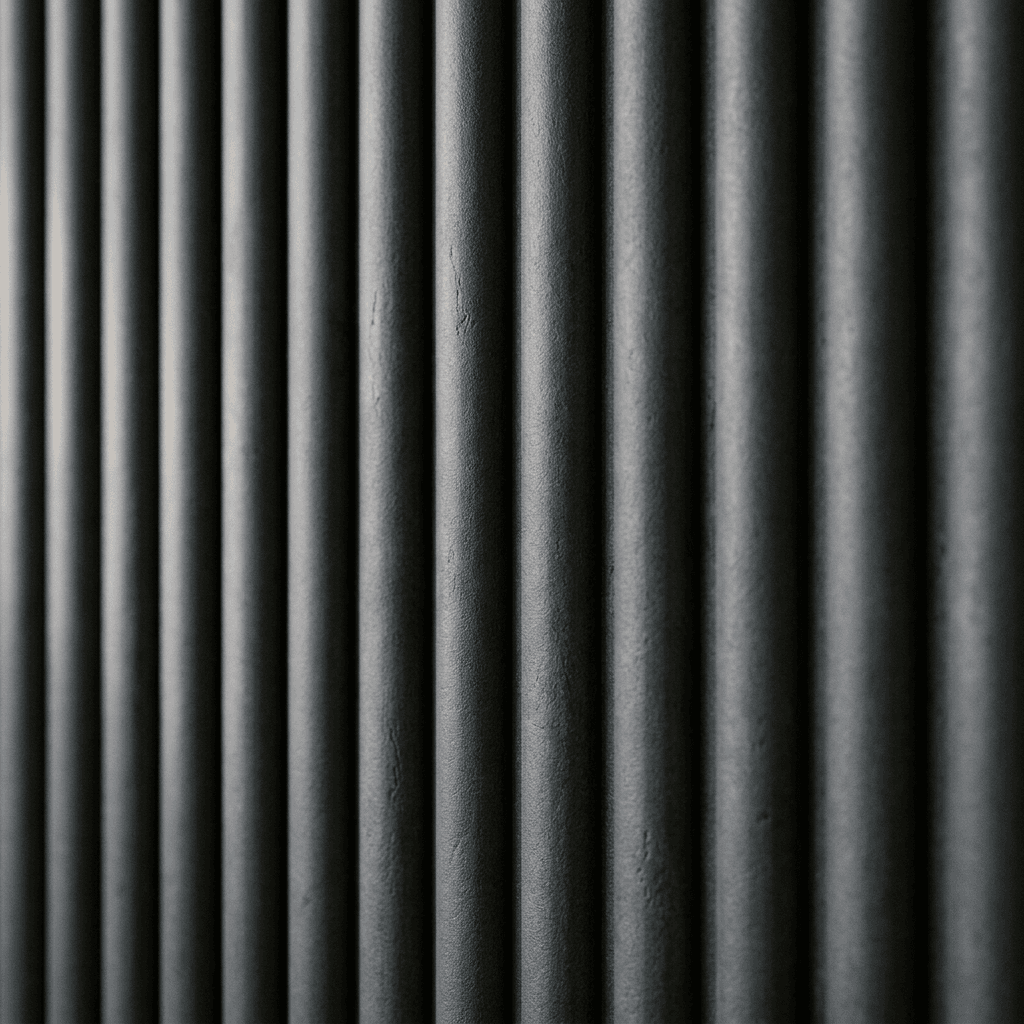
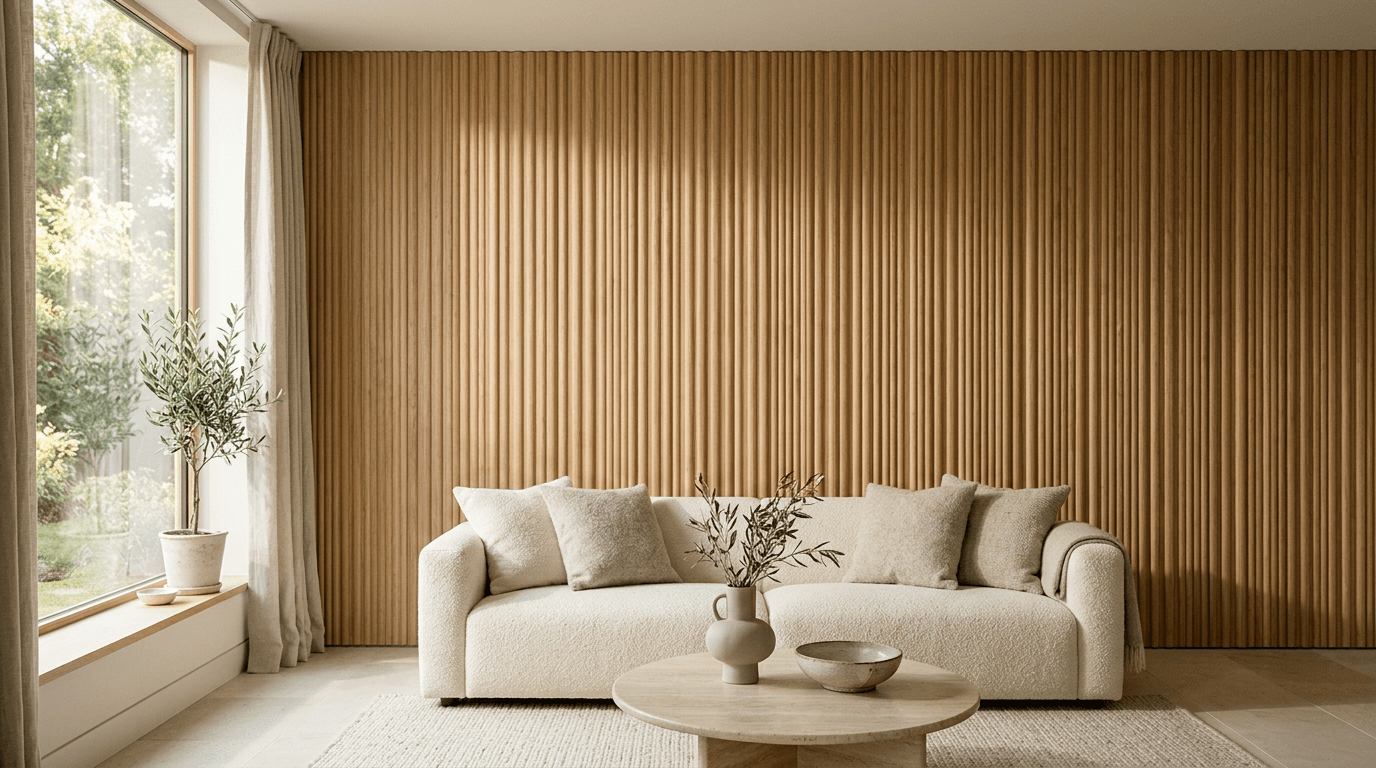
A profile of repeating rounded channels running the full length of a panel, so each flute catches light on one edge and casts a soft shadow on the other. In shops the word covers most ribbed panels. Our fluted wall panels guide explains the series and trims.
Reeded
Strictly, reeding is the opposite of fluting: rounded ridges stand out from the surface instead of channels being cut into it. On a wall the effect is similar, and many shops use reeded and fluted for the same ribbed look.
Slatted
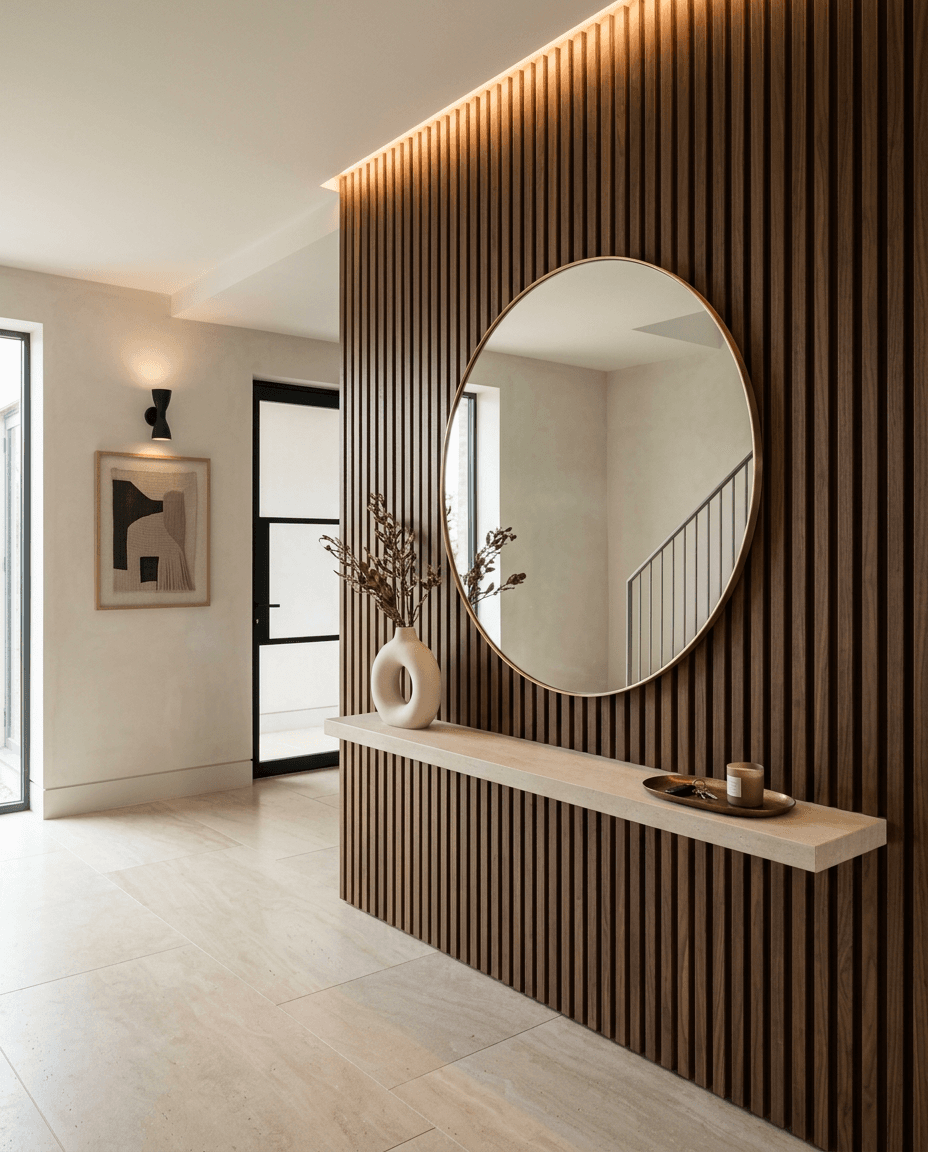
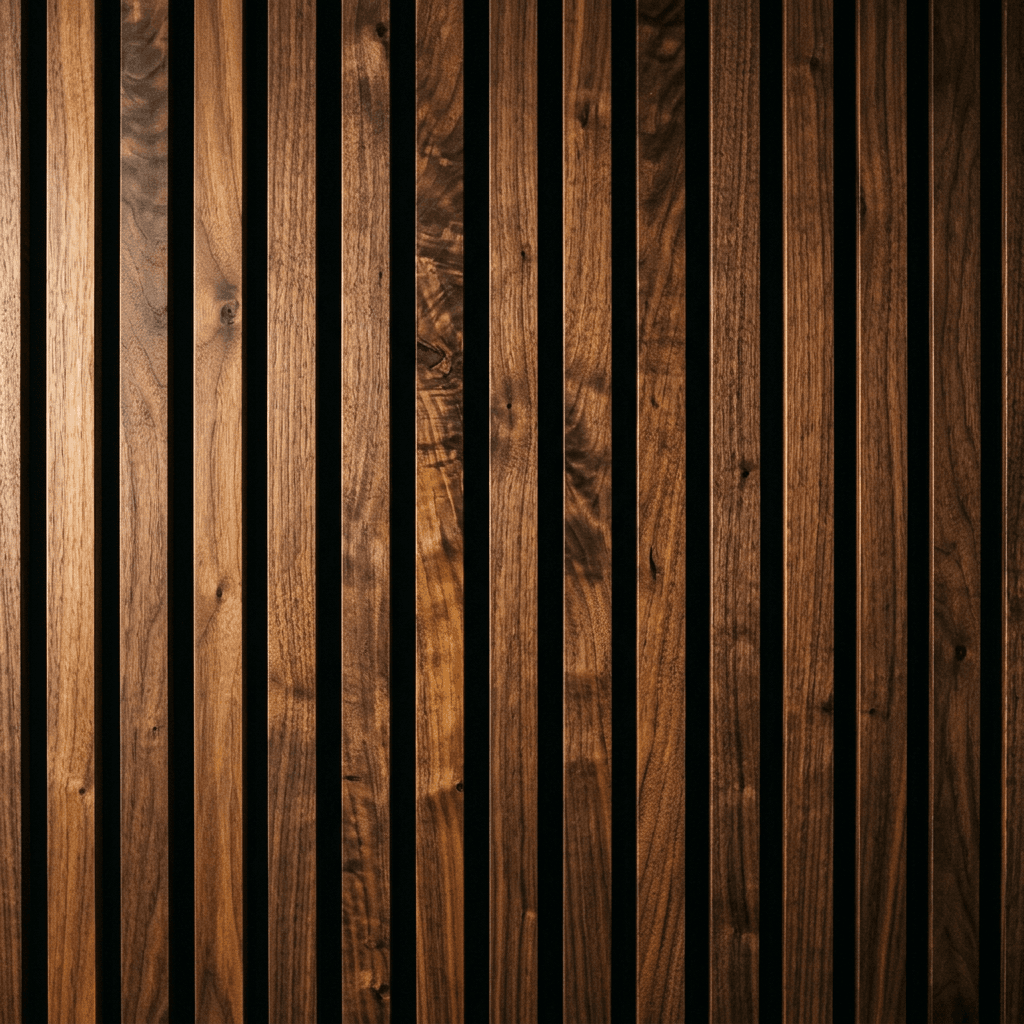
A profile of flat-faced slats separated by deep, square gaps, so the shadows are sharp dark lines rather than soft curves. It reads bolder and more architectural than fluted. Our Walnut slatted panel is in the 195 series, 14 mm thick.
Parts: what finishes the edges
Panels and sheets are only half of a finished wall. The other half is the small parts that finish every edge, corner and line where a run stops. They decide whether a wall looks crisp or homemade, and they are the items most often missing from a low quote, so it pays to know their names.
Trims
The profiles that finish the edges of a panelled or sheeted wall: corner trims for inside and outside corners, top trims along the ceiling, and joining trims where two materials meet. Ask which trims a quote includes, because they decide whether a wall looks finished.
End caps
Small closing profiles that cover the open side of the last panel where a run stops, at a door frame, a window or the edge of a section. Without them you see the cut profile of the panel.
Skirting
The board along the bottom of a wall where it meets the floor. On a panelled wall, a skirting or bottom trim covers the cut panel ends and any small gap where the floor isn’t level.
French moulding
Narrow decorative strips fixed to a wall or ceiling, usually in rectangular frames, to give a classic panelled look. Sellers in Pakistan list them in PVC and other plastics, in strips about 1 to 2.5 in wide and 9.5 ft long. We source French mouldings on request.
LED reveal
A strip of LED light set into a slim recess, so you see the glow and never the strip. On a media wall it usually runs along the edge of a marble centre or under a floating console. Its driver, the small box that powers it, should sit where it can be reached without taking a panel off.
Projects: the kinds of panelled wall
These are the words for what you are making rather than what it is made of. Several overlap, and shops use them loosely: a feature wall and an accent wall are often the same thing, and cladding and panelling describe the same idea from different angles. Here is how they are usually meant.
Feature wall
One wall finished differently from the rest of the room so that it becomes the focus, such as fluted panels behind a sofa or a marble wall behind the TV. It is usually the first wall you see from the door, like the living room feature wall in our room guides.
Accent wall
Mostly another name for a feature wall. Some designers use accent wall for a smaller or quieter touch, such as a strip of panels behind a desk or one wall in a stronger colour.
Media wall
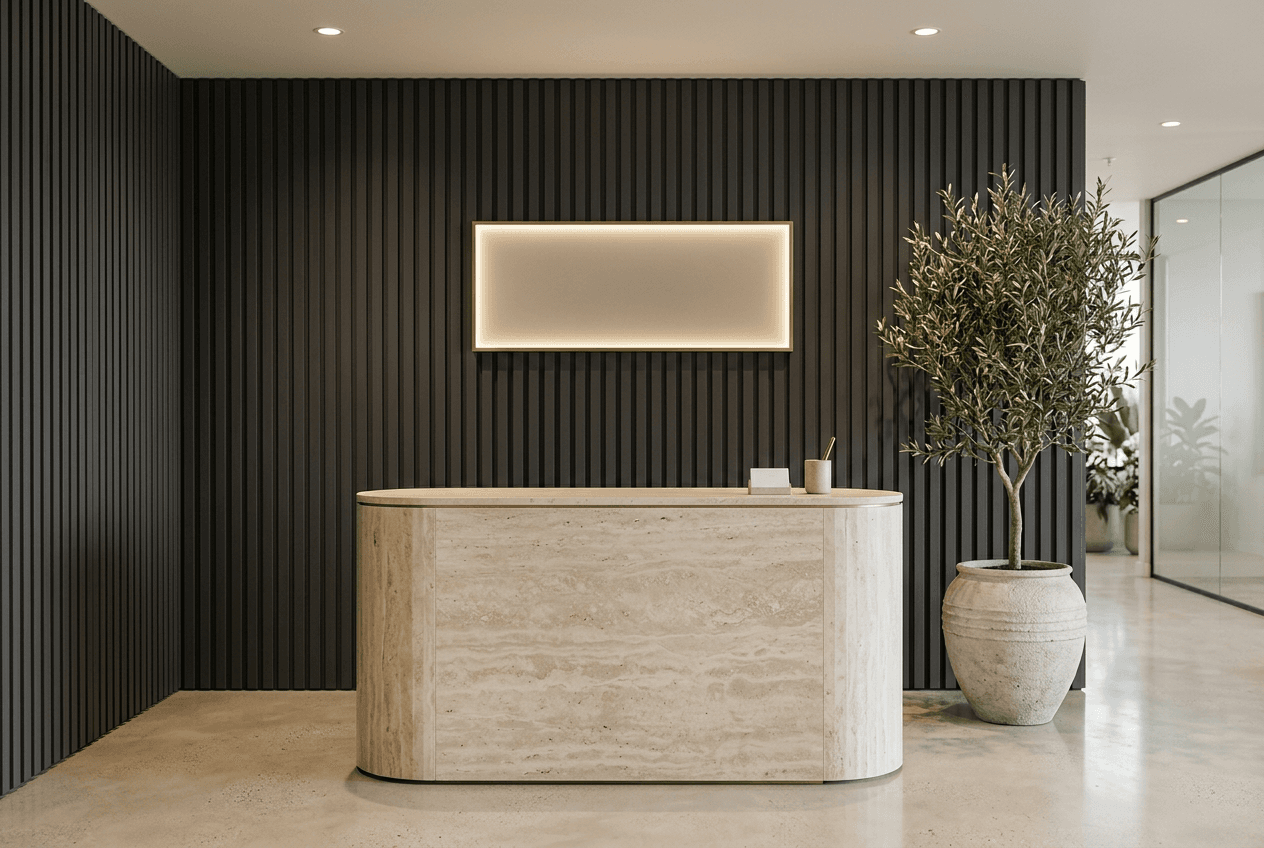
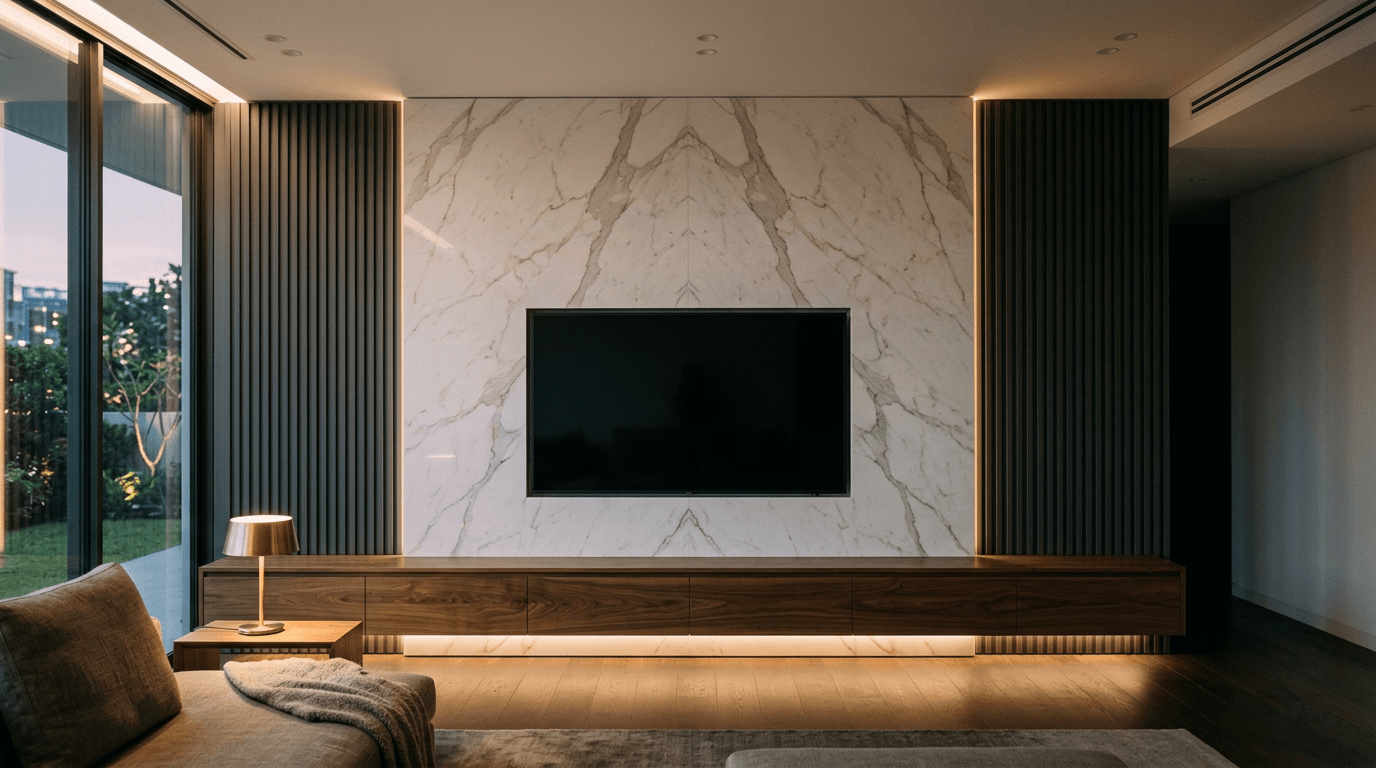
A TV wall designed as one piece: panels or sheets around the screen, often with an LED reveal, hidden wiring and a low console. A common version is a UV marble centre with fluted WPC either side, as in our media wall design guide.
Wainscoting
Panelling on the lower part of a wall only, finished with a rail along the top, with paint or wallpaper above. Traditionally it protected the most-knocked part of a wall, and it still suits dining rooms, corridors and stairs. A modern version is fluted or slatted WPC cut to a set height and capped with a top trim.
Wall cladding
Any material fixed over a wall to give it a new face, from panels and sheets to stone. The word is used for outside walls as well as inside; our panels and sheets are for indoor walls only.
Panelling
Covering a wall, or part of one, with panels. Panelling is the British spelling and paneling the American; both mean the same thing, from a full feature wall to wainscoting.
Site terms: the words used on the job
These are the words a fitter uses about the wall itself and the work of fixing to it. Most of them are about whether the wall is ready: dry, sound and flat enough for the finish you have chosen. Knowing them makes a quote easier to read and the right questions easier to ask.
Seepage
Water getting into a wall from a roof, a pipe, the ground or rain through an outside wall. It shows as bubbling paint, dark patches, mould and a white salty powder often called shora. No panel fixes seepage, as our guide to wall panels on damp walls explains.
Moisture meter
A handheld meter that reads how much moisture is in plaster or brickwork. Readings at several heights, near the floor, mid-wall and near the ceiling, show whether a wall is dry enough for a finish, which a look alone can’t tell you.
Primer
A first coat applied to a bare, porous or patched wall so that paint, paste or adhesive bonds evenly. Wallpaper in particular needs a primed, smooth, dry wall.
Adhesive
The glue that bonds a panel or sheet to the wall. It has to suit both the panel and the surface, and it only holds as well as that surface does: on loose paint or damp plaster, the adhesive holds but the wall lets go.
Scribing
Marking and cutting a panel’s edge to follow an uneven wall, floor, ceiling or corner, so it fits tight with no gap. It is how a fitter deals with walls that aren’t perfectly straight.
Setting out
Planning and marking where the first panel, sheet or tile goes, usually from a true vertical line rather than from a corner, which may not be straight. Good setting out splits the cut pieces evenly between both ends of a wall.
People also ask
What is the difference between a feature wall and an accent wall?
Usually nothing: both mean one wall finished differently from the rest of the room so that it becomes the focus. Some designers use accent wall for a smaller touch, such as a strip of panels or one painted wall, and feature wall for a full wall of panels, marble or wallpaper.
What is wainscoting?
Wainscoting is panelling on the lower part of a wall only, finished with a rail on top, with paint or wallpaper above. A modern version uses fluted or slatted WPC cut to a set height and capped with a top trim.
What is the difference between wall cladding and wall panelling?
Cladding is the broader word: any material fixed over a wall to give it a new face, inside or outside, including stone and sheets. Panelling means covering a wall with panels. Indoors, people often use the two words for the same job.
What does WPC stand for?
WPC stands for wood-plastic composite: wood fibre bound into plastic and formed into rigid boards. WPC wall panels are waterproof and termite-resistant, and ours come in fluted 160 and 170 series and a slatted 195 series, all 2.9 m long.
What is the difference between fluted and reeded panels?
Strictly, fluted means rounded channels cut into the surface and reeded means rounded ridges standing out from it. On a wall they look similar, and most shops in Pakistan use the two words for the same ribbed panel.
About this guide
Written by the interiors.pk studio team, based on the products we supply and install. Sizes and specs are from our current range. Last updated .